Building ShieldMod: A Full-Stack Licensing Platform (And Still Going)
The Beginning of a 565,528 Line Journey
It’s been almost 2 months since I launched ShieldMod in early November - a licensing distribution system for game modding developers. The project is still actively evolving, and before I dive into the technical horror stories (yes, there will be many), let me set the stage for what this project involved.
 Me, starting this project with “general ideas to implement”
Situation: The Problem I Set Out to Solve
Software distribution with proper licensing is a complex problem. Existing solutions were either:
- Too expensive for indie mod developers
- Too basic without proper hardware binding
- Too insecure with easily bypassable protections
- Too ugly with UX from the early 2000s
I needed a system that could:
- Authenticate users across multiple platforms (web browsers and desktop applications)
- Manage licenses with activation limits, expiration dates, and usage tracking
- Distribute files securely so only authorized users can access them
- Track devices to prevent license sharing while allowing legitimate multi-device use
- Monitor everything with comprehensive audit logs for security and debugging
Task: What I Needed to Build
From the start, I had four core principles:
- Secure - Because licensing systems are literally attack magnets
- Modern - No PHP spaghetti code here
- User-friendly - Even my non-technical users should get it
- Easy to Use - For developers integrating the system
The platform would need four interconnected components:
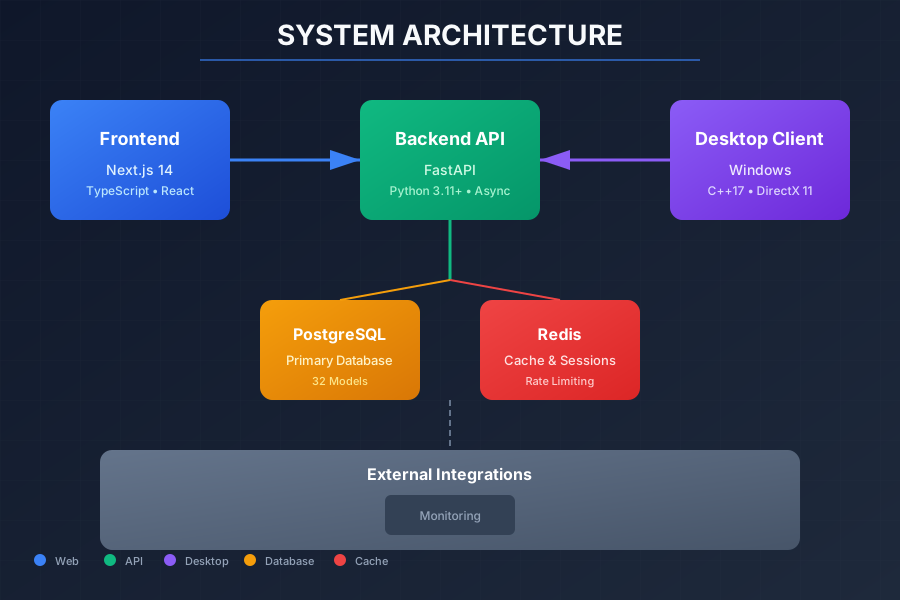
Action: How I Built It
The Tech Stack
Frontend: The Pretty Face
- Next.js 14 (React framework with App Router)
- TypeScript 5 (because
anyis not a type, it’s a cry for help) - TanStack Query v5 (server state management that doesn’t make you cry)
- TanStack Table v8 (data table handling)
- Tailwind CSS 3.4 (utility-first or die)
- shadcn/ui (beautiful Radix UI components)
- React Hook Form + Zod (form validation)
- Framer Motion (smooth animations)
- i18next (Korean/English internationalization)
Backend: The Brain
- Python 3.11+ with FastAPI 0.109 (async all the things!)
- PostgreSQL 15 (the only database that matters)
- Redis 7 (session storage, caching, rate limiting)
- SQLAlchemy 2.0 (async ORM)
- Alembic (database migrations)
- JWT (python-jose) (token-based auth)
- Argon2id / bcrypt (password hashing)
- AES-256-GCM (file encryption)
- Docker Compose (containerization)
Desktop Client & Module: The Muscle
- C++17/C++20 (because performance matters)
- DirectX 11 + ImGui (modern dark-themed GUI)
- WinHTTP (HTTPS communication)
- ECDSA P-256 (signature verification)
- HKDF-SHA256 (key derivation)
- Lua C API (scripting engine)
Key Technical Implementations
1. Dual Authentication System
Supporting both web and desktop clients required two authentication methods simultaneously:
Web Dashboard (Session-based):
1
Browser → POST /auth/login → Set HTTP-only cookie → Done
Desktop Client (JWT-based):
1
Client → POST /auth/client/login (with HWID) → JWT tokens → Periodic refresh
The JWT system uses short-lived access tokens (15 minutes) and longer refresh tokens (7 days), with proactive refresh 2 minutes before expiry.
2. Secure File Distribution
Files are encrypted server-side with AES-256-GCM, and each user gets a unique decryption key derived via HKDF:
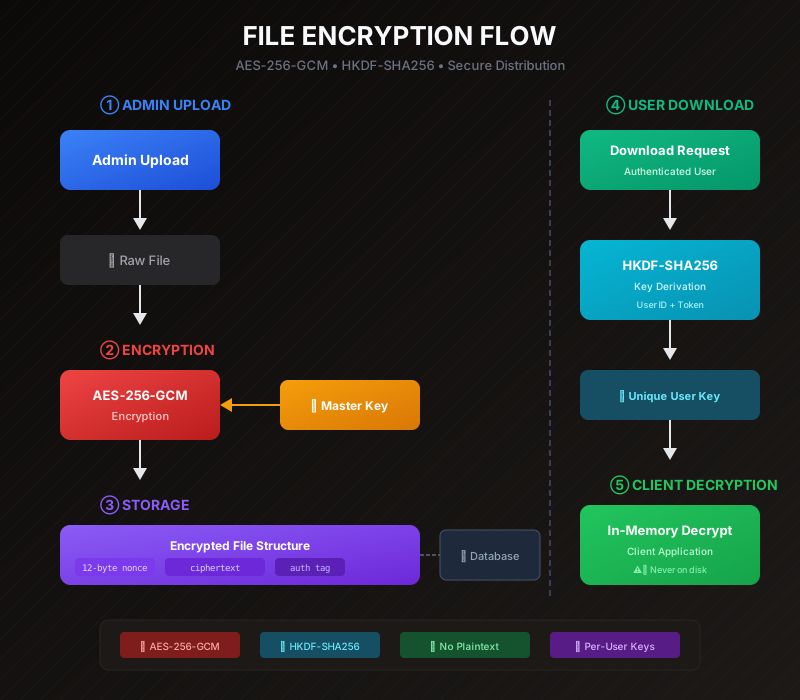
This means:
- Each user gets a unique decryption key
- Keys are derived, not stored (reducing attack surface)
- Stolen files are useless without valid credentials
- Plaintext never touches the disk
3. Multi-Device Management
Users can register multiple devices (up to a configurable limit), each tracked independently with:
- HWID binding (CPU ID, Motherboard Serial, BIOS Serial - NOT MAC addresses!)
- Device nicknames (“Gaming PC”, “Laptop”, etc.)
- First seen / last seen timestamps
- Monthly removal quotas
4. Security: Defense in Depth
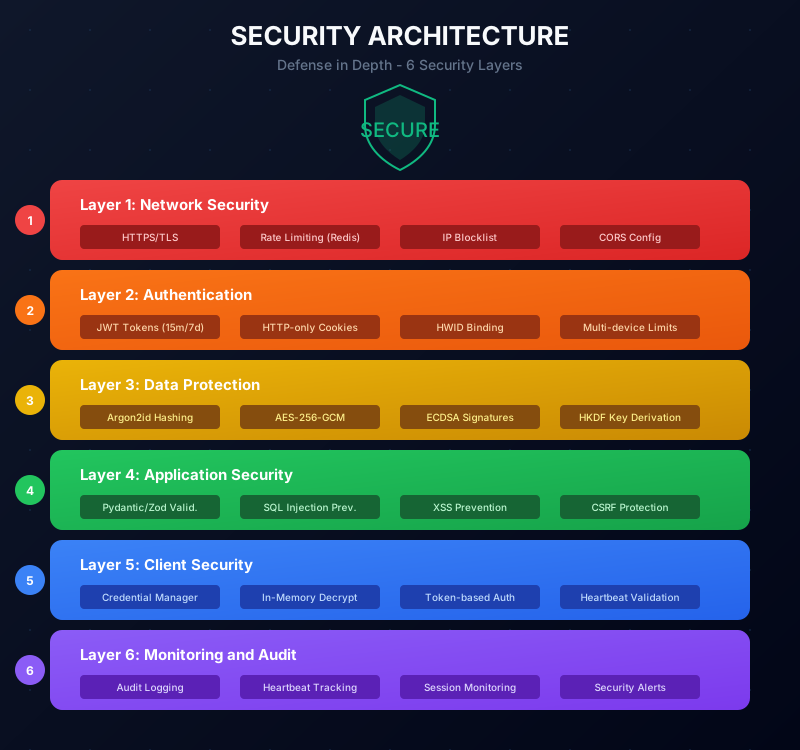
Result: The Numbers Don’t Lie
Starting in early October 2025, launching in November, and still actively developing:
| Metric | Value |
|---|---|
| Total Lines of Code | 565,528 lines |
| Total Commits | 2,721 commits across 4 repos |
| Bug Fix Commits | 1,060 fix commits (39% of total!) |
| Database Migrations | 25 Alembic migrations |
Yes, you read that right. 39% of my commits were bug fixes.
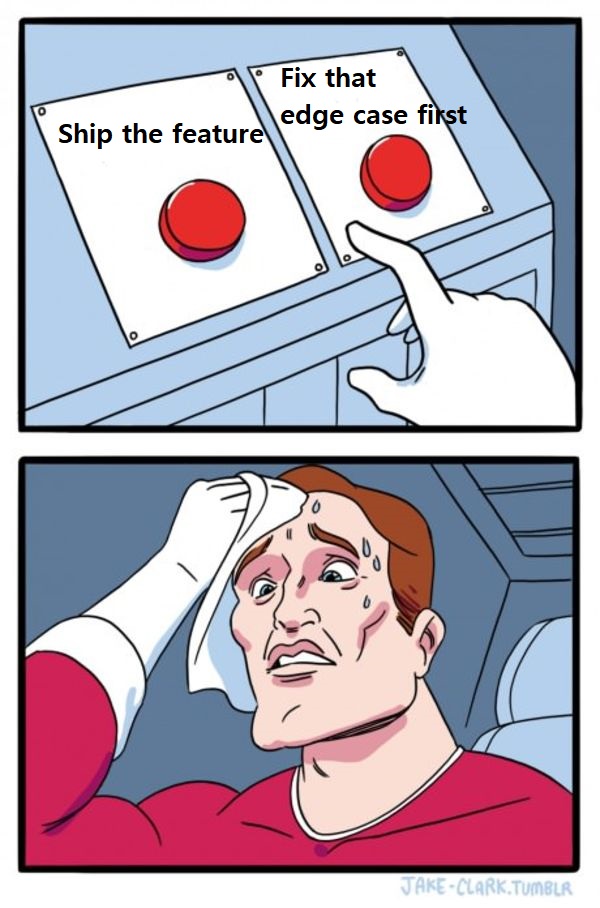 My daily struggle: “Ship the feature” vs “Fix that edge case first”
Codebase Breakdown
| Component | Language | Lines of Code | Commits | Fix Commits |
|---|---|---|---|---|
| Backend API | Python | 49,627 | 256 | 86 |
| Admin Dashboard | TypeScript/React | 166,901 | 331 | 136 |
| Desktop Client | C++ | 214,701 | 267 | 83 |
| Client Module | C++ | 134,299 | 1,867 | 755 |
That Client Module with 755 fix commits? That’s where the real fun happened. More on that in future posts.
Component Statistics
| Category | Count |
|---|---|
| API Routers | 31 endpoint modules |
| Database Models | 32 SQLAlchemy models |
| React Components | 129 components |
| Custom React Hooks | 30 hooks |
| TypeScript Type Files | 22 type definitions |
| Pages (Dashboard) | 22 pages |
| Pages (User Portal) | 20 pages |
Key Features Delivered
Admin Dashboard:
- Real-time statistics (users, sessions, licenses)
- Registration trend charts (30-day)
- License expiration analytics
- User management with ban/unban + HWID reset
- Device comparison analytics
- Comprehensive audit logs with filtering and export
User Portal:
- Personal dashboard with usage stats
- Device management (add/remove with quotas)
- License information display
- Session management
- Telegram integration setup
Desktop Client:
- Modern ImGui interface with DirectX 11
- Secure credential storage via Windows Credential Manager
- In-memory file decryption
- Automatic token refresh
- Multi-device support
Client Module:
- Lua scripting for extensibility
- Heartbeat license validation with grace periods
- Crash recovery with comprehensive logging
- Telegram notifications
The Development Timeline
1
2
3
4
5
6
7
8
9
10
11
12
13
14
15
16
17
October 2025 ──────────────────────────────────────────────────────
    ├── Week 1: "I have general ideas" phase
    ├── Week 2: Backend API foundation + Database design
    ├── Week 3: Frontend dashboard MVP + Desktop client starts
    └── Week 4: Integration hell + The Great Debugging Period™

November 2025 ─────────────────────────────────────────────────────
    ├── Week 1: Launch! 🚀
    ├── Week 2-3: Bug fixes from real users (the fun begins)
    └── Week 4: Multi-device support feature

December 2025 ─────────────────────────────────────────────────────
    ├── Ongoing improvements and new features
    └── More debugging (it never ends)

January 2026 ──────────────────────────────────────────────────────
    └── Still going strong... 💪
What’s Coming Next
Over the next few posts, I’ll be sharing the most painful, educational, and sometimes hilarious bugs I encountered. Here’s a preview:
The Infinite Redirect Loop Nightmare - How logout became an endless dance between
/loginand/dashboardHWID Instability: When MAC Addresses Betray You - 47 support tickets in one week because I trusted network adapters
Race Conditions in Token Refresh - When 5 requests all decide to refresh the token at the same time
The 307 Redirect That Broke Everything - FastAPI’s helpful default that destroyed all PUT requests
ECDSA Signature Format Mismatch - 6 hours of debugging because Python and C++ disagree on what a signature looks like
Each post will include:
- The actual problem (with real logs and error messages)
- The investigation process
- The solution (with working code)
- Memes (because debugging without humor is just suffering)
Lessons Learned (Spoiler Alert)
If I had to summarize these months of development:
“Of course I didn’t plan everything since the beginning, but I have general ideas to implement”
— Me, underestimating everything
 Me looking at new frameworks while my bugs pile up
The truth is, starting is not that easy. You can have the best tech stack, the cleanest architecture diagrams, and the most detailed specifications - but the moment you write git init, reality starts fighting back.
Key Takeaways:
- Security is an architecture — It’s not something you add at the end; it must be designed in from the start.
- Async is essential — For any system handling concurrent users, blocking I/O is a bottleneck.
- Type safety saves time — The hours spent defining types are repaid in fewer bugs and easier refactoring.
- Cross-platform is hard — Web and desktop have fundamentally different models; abstracting the differences requires careful design.
- Monitoring is not optional — Without comprehensive logs, debugging production issues is nearly impossible.
Stay tuned for the next post where I’ll share how a simple logout button caused 200+ API requests in under 5 seconds and crashed browser tabs across the globe.
This is part 1 of my “Building ShieldMod” series. Subscribe to follow along as I share the triumphs and tragedies of building a full-stack SaaS platform from scratch.