12 Lessons from Building a Full-Stack Platform (With Memes)

565,528 Lines. 2,721 Commits. 1,060 Bug Fixes. Here’s What I Learned.
After months of building ShieldMod (started October, launched November, still going strong into 2026) - a licensing platform spanning Python, TypeScript, C++, and my sanity - I’ve compiled the 12 biggest lessons. Each one came with its own special flavor of pain.
 “Wait, it’s all debugging?” “Always has been.”
Lesson 1: Authentication State is Distributed
The Bug: Users got stuck in infinite redirect loops after logging out.
The Lesson: Your user’s “logged in” state exists in at least 4 places:
- HTTP-only cookies
- React state
- React Query cache
- LocalStorage
When logging out, you must clear ALL of them atomically, in the right order.
1
2
3
4
5
// Clear EVERYTHING before redirecting
queryClient.clear();
localStorage.clear();
deleteCookies(['session_id', 'token']);
window.location.href = '/login?expired=true'; // Full reload, not router.push
 Me pretending the logout button works fine in demo
Lesson 2: Hardware IDs Are Fragile
The Bug: 30% of users had their HWID change after rebooting.
The Lesson: Only use hardware identifiers that are physically soldered onto the machine:
| Trust Level | Components |
|---|---|
| TRUST | CPU ID, Motherboard Serial, BIOS Serial |
| CAREFUL | Windows Product ID, HDD Serial |
| NEVER | MAC Address, IP Address, Hostname |
MAC addresses change when you install Docker, VPNs, or basically look at them wrong.
 Me after 47 HWID reset requests on a Monday morning
Lesson 3: Async is Hard
The Bug: Multiple API requests simultaneously refreshed the auth token, invalidating each other.
The Lesson: When multiple async operations depend on a shared resource, use a mutex pattern:
1
2
3
4
5
6
7
8
9
10
11
12
13
14
let isRefreshing = false;
let subscribers: Array<(token: string) => void> = [];

if (needsRefresh) {
  if (!isRefreshing) {
    isRefreshing = true;
    const token = await doRefresh();
    subscribers.forEach(cb => cb(token));
    subscribers = [];
    isRefreshing = false;
  } else {
    await new Promise(resolve => subscribers.push(resolve));
  }
}
One request refreshes. Others wait. Everyone’s happy.
 Can’t have race conditions if you add a mutex
Lesson 4: Frameworks Have Defaults (And They Will Hurt You)
The Bug: All PUT and PATCH requests returned 307 redirects with empty bodies.
The Lesson: FastAPI’s default redirect_slashes=True redirects /users/123 to /users/123/. For PUT requests, browsers drop the body during the redirect.
1
2
3
4
# Disable the sneaky default
app = FastAPI(
    redirect_slashes=False  # This one line took 3 hours to find
)
Always read the docs for default behaviors. ALWAYS.
Lesson 5: Migrations Need Coordination
The Bug: alembic upgrade head failed with “Multiple heads detected.”
The Lesson: When multiple developers work on database migrations:
- Communicate before creating migrations
- Make migrations idempotent (check before modify)
- Add CI checks for multiple heads
- Merge migration branches before they diverge too far
1
2
3
4
5
6
# Add to CI
heads=$(alembic heads | wc -l)
if [ "$heads" -gt 1 ]; then
    echo "ERROR: Multiple migration heads!"
    exit 1
fi
 Database migrations when two developers work in parallel
Lesson 6: Time is Relative (Store UTC, Display Local)
The Bug: Korean users saw licenses expiring 9 hours early.
The Lesson:
- Store all times as UTC in the database
- Attach timezone info when serializing (
+00:00) - Convert to local time only in the frontend
1
2
// Frontend: Always convert UTC to user's timezone
formatInTimeZone(date, 'Asia/Seoul', 'yyyy년 MM월 dd일 HH:mm:ss');
Never do timezone math manually. Use a library. Trust me.
Lesson 7: Sometimes You Need to Redesign
The Bug: Users couldn’t use multiple devices. Single HWID per user wasn’t enough.
The Lesson: When feature requests pile up against your architecture, it’s time to redesign, not patch.
Going from single HWID to multi-device required:
- 3 new database tables
- 5 altered tables
- 47 modified files
- 23 commits across 4 repos
Was it worth it?
- HWID reset requests: 47/week → 3/week
- User satisfaction: 3.2/5 → 4.7/5
Sometimes you have to tear it down to build it right.
 That’s a lot of damage… to my codebase
Lesson 8: Event Loops Are Territorial
The Bug: Background cleanup jobs failed with “Connection pool exhausted.”
The Lesson: When using async Python:
- Don’t mix
BackgroundScheduler(sync) withAsyncSession(async) - Use
AsyncIOSchedulerinstead - Share the event loop, don’t create new ones
1
2
3
4
5
6
7
# BAD: Sync scheduler trying to run async code
scheduler = BackgroundScheduler()  # Creates new thread
asyncio.run(cleanup())  # Creates new event loop ← WRONG

# GOOD: Async scheduler sharing FastAPI's event loop
scheduler = AsyncIOScheduler()  # Same thread as FastAPI
scheduler.add_job(cleanup, 'interval', minutes=10)
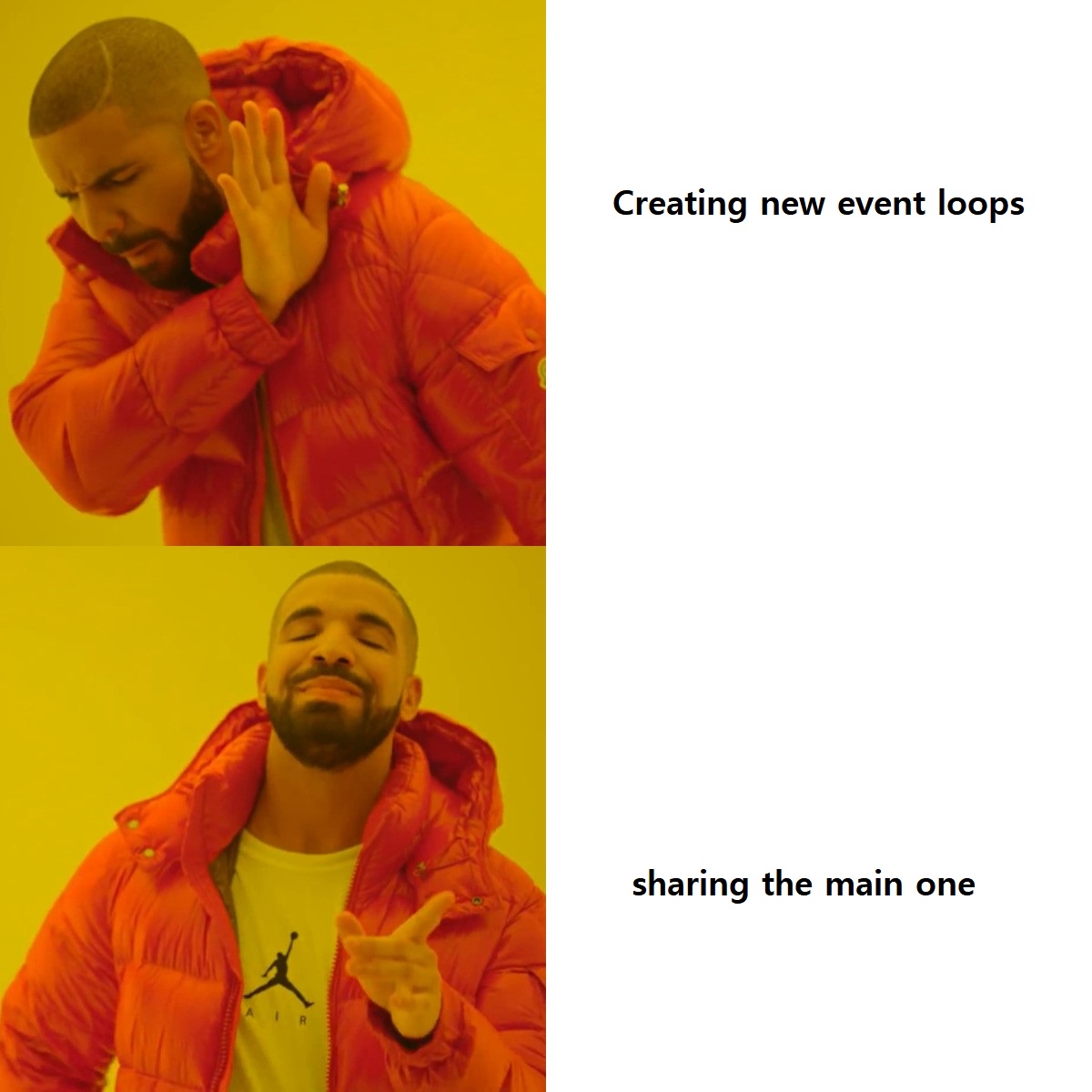 Creating new event loops vs. sharing the main one
Lesson 9: Crypto Formats Vary
The Bug: Python signed data correctly, but C++ couldn’t verify it. Ever.
The Lesson: Cryptographic libraries output different formats:
- Python
cryptography: DER-encoded (ASN.1) OpenSSL raw: Concatenated r s
1
2
3
4
# Convert DER to raw for cross-platform compatibility
r, s = decode_dss_signature(der_signature)
raw_signature = r.to_bytes(32, 'big') + s.to_bytes(32, 'big')
# Now it's 64 bytes exactly, not 70-72 variable
When signing in one language and verifying in another, explicitly document the format.
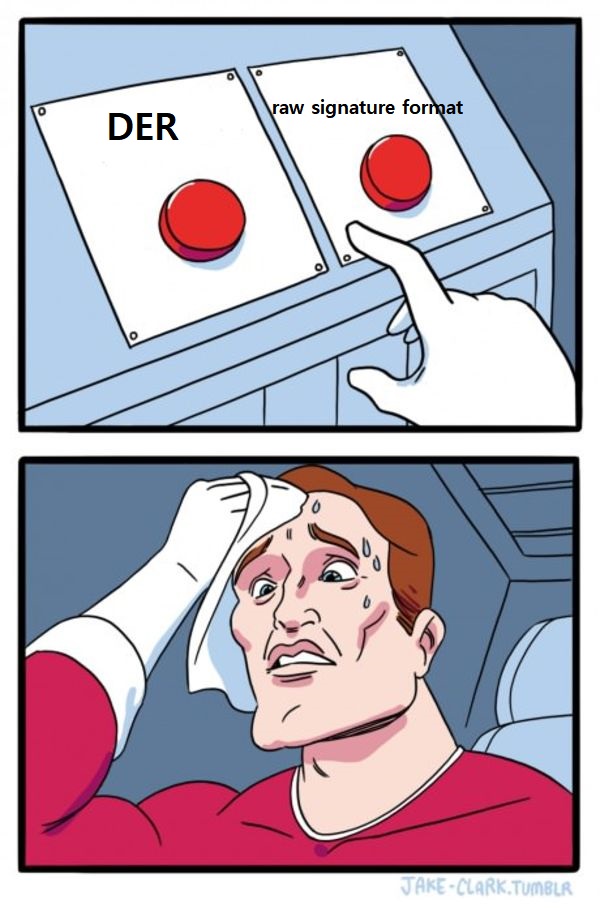 Me choosing between DER and raw signature format
Lesson 10: React Has Rules (Follow Them or Die)
The Bug: “Rendered more hooks than during the previous render”
The Lesson: React hooks must be called in the same order every render. This means:
1
2
3
4
5
6
7
// BAD: Hook after conditional return
if (isLoading) return <Spinner />;
const data = useMemo(() => ...); // ← Sometimes called, sometimes not

// GOOD: All hooks before any returns
const data = useMemo(() => ...);
if (isLoading) return <Spinner />;
Use the ESLint plugin. It exists for a reason.
1
2
3
4
5
{
  "rules": {
    "react-hooks/rules-of-hooks": "error"
  }
}
 React when you call hooks conditionally
Lesson 11: Networks Are Unreliable (Build Grace Periods)
The Bug: Brief WiFi drops terminated users immediately, losing their work.
The Lesson: Distinguish between temporary and permanent failures:
| Error Type | Action | Grace Period |
|---|---|---|
| Network timeout | Retry | 30 minutes |
| Server 500 | Retry | 30 minutes |
| License expired | Terminate | None |
| Account banned | Terminate | None |
1
2
3
4
5
6
7
8
9
10
if (isTemporaryError(error)) {
    if (minutesSinceLastSuccess < GRACE_PERIOD) {
        showWarning("Reconnecting...");
        scheduleRetry();
    } else {
        terminateGracefully("Unable to verify for 30 minutes");
    }
} else {
    terminateImmediately(error.message);
}
False terminations dropped from 15% to 0.5% of sessions.
 User experiencing network issues: “First time?”
Lesson 12: CORS is a Multi-Point Check
The Bug: Login worked, but subsequent requests weren’t authenticated.
The Lesson: Cross-origin cookies require ALL of these:
- Frontend:
withCredentials: true - Backend CORS:
allow_credentials=True - Backend CORS: Explicit origins (NOT
*) - Cookie:
SameSite=Lax(orNonewithSecure) - All middlewares: Must pass through
OPTIONS
Miss ONE and the whole thing breaks silently.
1
2
3
4
5
6
7
8
# The complete CORS setup
app.add_middleware(
    CORSMiddleware,
    allow_origins=["https://app.example.com"],  # NOT "*"!
    allow_credentials=True,  # Required for cookies
    allow_methods=["*"],
    allow_headers=["*"],
)
The Summary
| Lesson | Category | Time Lost |
|---|---|---|
| Distributed auth state | Architecture | 3 days |
| Fragile HWIDs | Platform | 2 days |
| Async mutex pattern | Concurrency | 1 week |
| Framework defaults | Configuration | 3 hours |
| Migration coordination | Teamwork | 4 hours |
| Timezone handling | Data | Ongoing |
| Major redesign | Architecture | 2 weeks |
| Event loop isolation | Python | 4 hours |
| Crypto format mismatch | Cross-platform | 6 hours |
| React hook rules | Frontend | 30 minutes |
| Grace period handling | UX | 3 days |
| CORS configuration | Security | 2 days |
Final Thoughts
The 1,060 fix commits in this project weren’t failures. Each one was a lesson. Each bug taught me something about the technology, about users, or about myself.
If I could go back and give myself one piece of advice before starting:
Log everything. Document assumptions. Test logout as thoroughly as login. And never, ever trust MAC addresses.
Thanks for following along with the “Building ShieldMod” series. If you’re building something similar, I hope these lessons save you some of the pain I went through.
Now if you’ll excuse me, I have some new support tickets to read.